Mimosa pudica
Common name: Sensitive Plant, Sleeping Grass
Family: Mimosaceae
Origin: Brazil
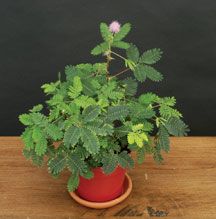
Height: 5 ft
Width: 3 ft
Description:
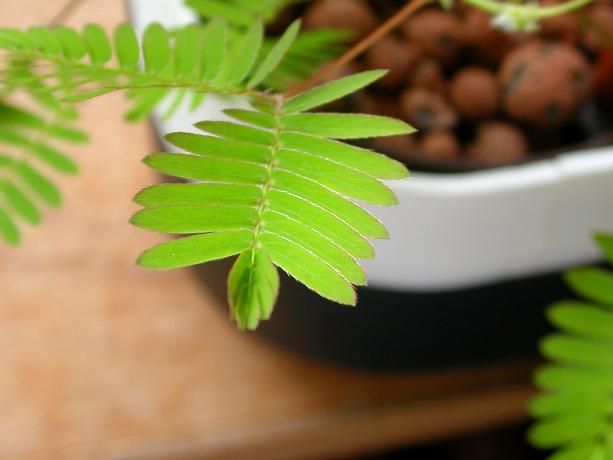
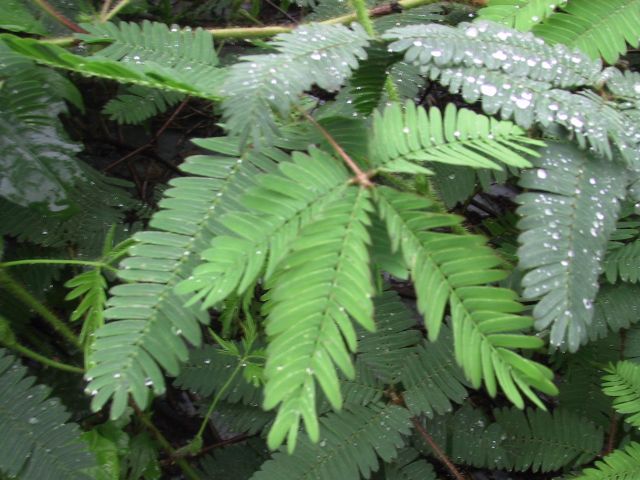
This short lived evergreen sub shrub is usually treated as an annual. It is grown for its curiosity value - the fern like leaves close up and droop when touched or exposed to a flame, usually re-opening within minutes.
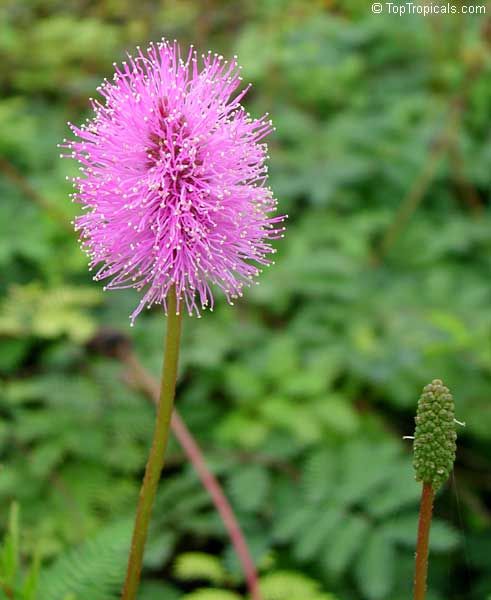
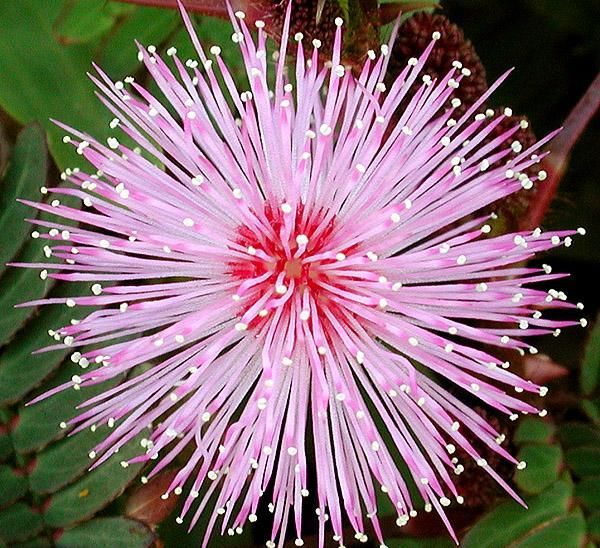
In some areas this plant is becoming a noxious weed. The stem is erect, slender and branching. The leaves are bipinnate, fern like and pale green- closing when disturbed. The flowers are pale lilac pink, occurring in globose heads and appearing in summer.
It is adaptable to most soils in an open, sunny position, and is drought and frost tender. Due to its ability to fix nitrogen from the air it does well on poor soils. This plant requires a medium light exposure, an evenly moist soil, and temperatures between 60 and 85 degrees. One should use caution when handling seedlings because the plant dislikes root disturbance. Mimosa may be difficult to grow and is sensitive to over watering.
|
|
|
Cultivation and care:
These frost-tender plants prefer full sun and moderately fertile, well-drained soil. Water well during the growing period, and sparingly in winter. Propagate from seed although summer cuttings are also practical. Soak seeds during one day: place in a pot 6 cm in diameter and then transfer to pots of 15 cm when the plant develops, or directly 3 to 6 seedlings in a pot of 15 cm. The best seedling is selected when the plant reached approximately 10 cm. One may cover the plant to maintain a humidity sufficient in the pot.
Propagation:
By seed or by cuttings. Seeds need to germinate- cover the seeds with very hot water and let soak overnight or until they swell. Pick out those that didn't swell and repeat this process with them. Sow swollen seeds immediately in seeding mix, covering with two to three times their thickness. Do not over water or allow to dry out and provide good drainage and bright light. It should germinate within a few days with pretreatment. Do not over water and keep humidity low or fungal problems may occur.
Pests and diseases:
Cochineals are insects inside a cotonneuse mass. One gets rid of them by progressively removing them using a cotton stem soaked with alcohol. If the insects are too numerous, it is to better sacrifice the plant and not to re-use the ground nor the pot.
Info:
- This chemical structure of mimosine is what pharmaceutical companies are working with to find a medical use for this plant.
Articole asemănătoare
-
Plante neobisnuite
Un adevarat campion, aceasta bizara planta din Namibia poate fi intalnita doar aici, in zonele desertice, si pare sa reziste in orice conditii, oricat de dificile.
-
Flori potrivite pentru cadoul de Ziua Indragostitilor
Fiind acea luna din an care include sarbatoarea Dragobetelui, februarie tinde sa-si piarda orice conotatie secundara, pentru ca - mai mult decat orice - oamenilor le place sa iubeasca si sa fie iubiti.
-
De ce flori ne bucuram in noiembrie?
Desi vremea devine tot mai intunecata si mai rece in noiembrie, exista unele flori care prospera chiar si in aceste conditii dificile. Spre incredintare va prezentam o lista a celor mai populare flori care se intalnesc in perioada aceasta a anului in gradinile zonelor temperate ale globului.
-
Mimosa pudica
Mimosa pudica este o planta anuala, vesnic verde. Este cultivata ca o curiozitate - frunzele sunt asemanatoare frunzelor de feriga, si se strang daca sunt atinse sau expuse la o flacara (de obicei se redeschid in cateva minute
-
Plante ce prezic cutremure si atrag undele electromagnetice
Exista multe ciudatenii in lumea plantelor si fascinatia oamenilor pentru lucrurile iesite din comun a facut ca unele plante sa primeasca atribute din cele mai stranii...