Hyacinthus orientalis
Family: Liliaceae
Origin: Mediterranean region and South Africa
Plant type: bulb
Light: full sun
Height: 8 in. to 10 in.
Soil: fertile, well drained
Bloom size: 1 in. to 1 in.
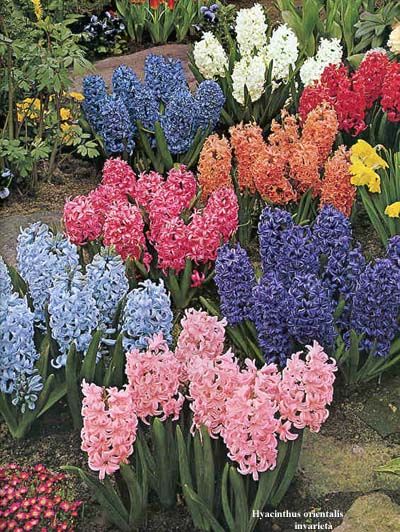
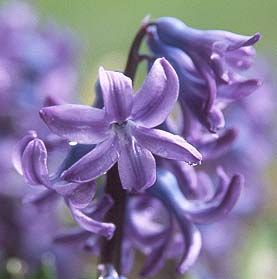
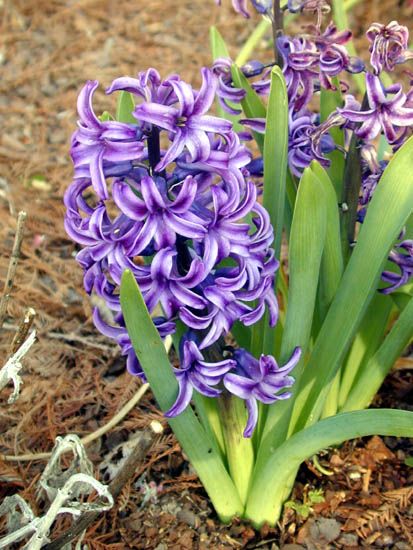
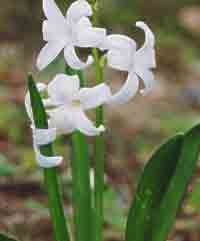
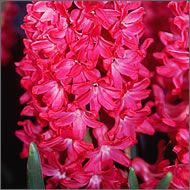
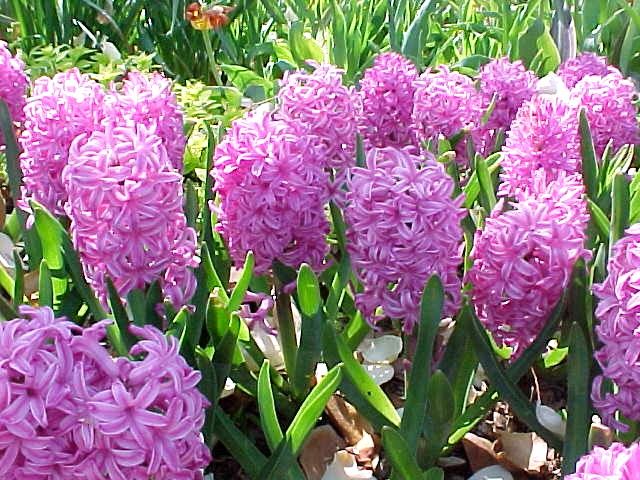
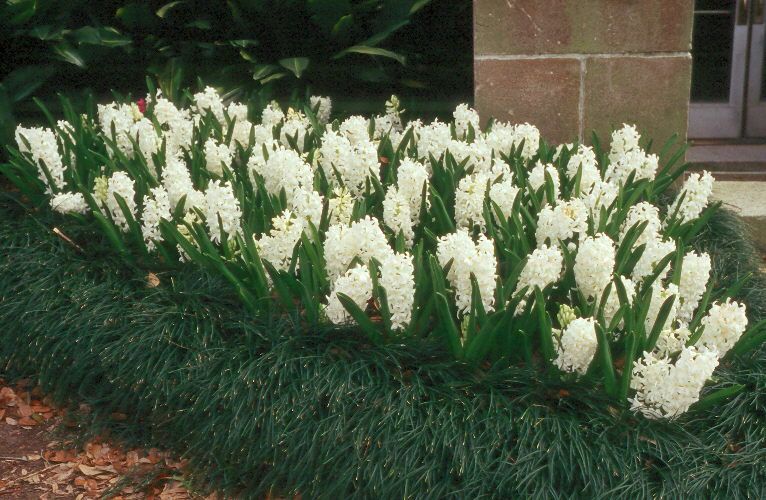
Bloom color: usually white, pink, peach and blue. More unusual colours to look for include dark wine purples , rosy reds, navy, egg-yolk yellows and soft oranges.
Foliage color: medium-green
|
|
 |
 |
Description
Hyacinth blooms are very formal and fragrant. Bulbs are graded in centimeters, from exhibition size (19 cm) to miniatures (14 to 15 cm). They bloom at the same time mid-season tulips are blooming. Hyacinths are planted in small, irregular groups for best effect. They are excellent for cutting and easily forced in pots for indoor use. The bulbs are toxic and not attractive to rodents.
It was brought to Western Europe in the 16th century and was first cultivated in Austria in the 1500's. During the 17th and 18th centuries, like the tulip, it was to be found only in the collections of very rich flower collectors. Because of the hyacinth's pervasive perfume, the bulbs were exorbitantly expensive. The bulbs are now grown in Holland and Great Britain.
|
|
 |
Care and cultivation
Plant in fall, 6 weeks before ground freezes, in a sunny site with compost-rich soil. Set bulbs 6 inches deep and 6 inches apart. Unless soil is very dry, there is no need to water upon planting.
Monitor soil moisture all season. In early spring, when shoots emerge and again after flowers fade, feed with an all-purpose bulb fertilizer, following package directions.
Deadhead after plants have bloomed. Hyacinths produce offset bulbs that can be removed when the bulbs are dormant and replanted to increase the planting.
For forcing hyacinths, buy pre-chilled bulbs that have received a cold treatment imitating winter. Plant in soil-filled pots or use forcing glasses designed to hold bulbs just above the water level. If forcing in water, fill jars so water barely touches bottom of bulb, and place in a dark, cool (about 50F) spot until roots are well developed and top growth is visible (3-4 weeks). Then bring bulbs to a warm, sunny area to encourage top growth. To prolong bloom, move plants out of direct sun when they begin to flower.
Varieties
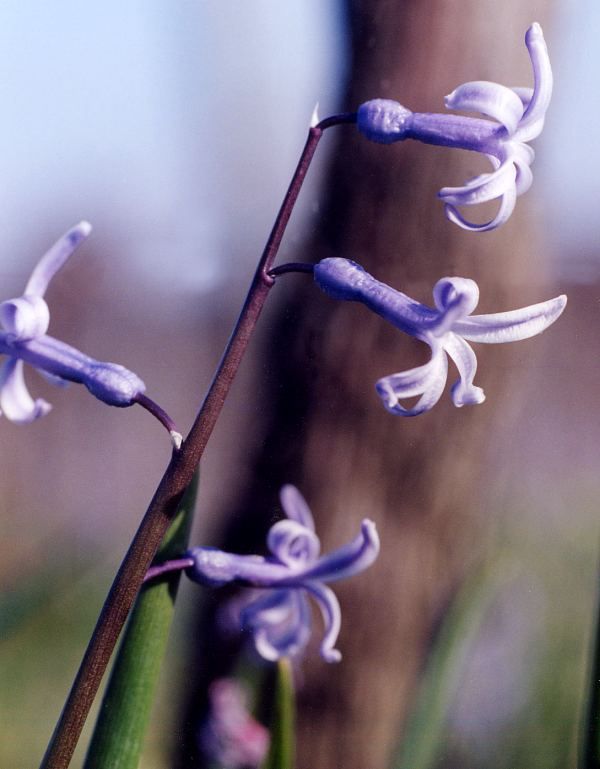
Varieties come in all colours including pure white "Carnegie", salmon "Anna Marie", delicate pink " Splendid Cornelia" and baby blue "Delft Blue.
|
|
|
Articole asemănătoare
-
Primavara in gradina de flori perene
Cu siguranta primavara este cel mai ocupat anotimp pentru gradinarii care isi dedica intreaga munca plantelor perene. Daca frigul iernii i-a tinut departe de gradina, sosirea zilelor calde ii invita acum afara din casa, propunandu-le sa redescopere in propria maniera frumusetea naturii.
-
Zambila – intre floare mitologica si cadou de Ziua Indragostitilor
Florile parfumate ale zambilelor se bucura pe teritoriul Europei, gratie farmecului dar si extinderii lor generoase, de o lunga traditie si un simbolism aparte. Originara din Orientul Mijlociul, zambila (Hyacinthus orientalis) s-a raspandit de timpuriu in toate zonele adiacente Marii Mediterane.
-
Cele mai populare soiuri de zambila
Zambila de gradina, Hyacinth Orientalis, provine din indepartatul tinut al Anatoliei si a fost adusa in Europa in secolul al XVI-lea.
-
Zambila, giuvaier al primaverii
Zambila este o floare a primaverii, a sperantei si a vietii, care nu are nevoie de ocazii speciale pentru a fi oferita chiar si barbatilor. Florile in forma de clopotei placut si puternic parfumate au nuante din cele mai diferite: indigo, purpuriu inchis, coral, ciclam etc.
-
Delphinium, o floare de toamna deosebita
Delphinium este o floare de toamna ce face parte din familia de plante perene Ranunculaceae si este originara din emisfera nordica.